Individual Psychotherapy


Hello, my name is Bruce Sanguin
I don’t work from a fixed method or map.
I pay close attention to what is arising in you—and between us—because that’s where the truth of your life reveals itself.
Most of what gets in the way of living your own life was formed early. When love felt uncertain, or conditional, you adapted. You learned to shape yourself around others—to be who you needed to be in order to belong.
That adaptation often becomes what we call the “self.”
But it’s not your truest self. It’s a strategy.
In our work, we bring that strategy into awareness—not to judge it, but to understand it. And as it becomes conscious, something else begins to emerge.
What I call the Heart Self.
Not a fixed identity, but a living, unfolding way of being—
more honest, more grounded, less driven by fear of disconnection.
The therapy relationship becomes the place where this shift happens in real time.
From self-protection…
to self-expression.
The Journey
-
The Heart Self
The Heart Self is the deepest and most authentic dimension of who you are beneath the protective identity you learned to construct in order to survive, belong, and be loved. It is not a performance, a role, or a strategy for approval. The Heart Self emerges as we surface unconscious beliefs, fears, and adaptive patterns that shaped the egoic self — the part of us organized around safety, control, and external validation. Unlike the survival self, the Heart Self is not driven by fear, image management, or the need to please. It is grounded in presence, truth, creativity, compassion, courage, and freedom. The journey toward the Heart Self is not about becoming someone else, but about reclaiming the life that was always waiting underneath the layers of adaptation — a life lived from authenticity rather than fear, from self-trust rather than self-betrayal, and from openness to possibility rather than endless survival.
-
The Survivor Self
-
Core Unconscious Beliefs (CUBs)
Core Unconscious Beliefs are the deeply rooted conclusions we formed about ourselves in response to painful early experiences, especially experiences of shame, emotional abandonment, criticism, rejection, or conditional love. These beliefs are not intellectual ideas we consciously chose; they were absorbed emotionally and psychologically long before we had the capacity to question them. Over time, they became the invisible lens through which we interpret ourselves, others, and the world. Beliefs such as “I don’t matter,” “I’m not enough,” “I’m too much,” “I don’t belong,” or “Love must be earned” quietly shape our emotions, relationships, behaviors, and sense of identity. Much of what we call people-pleasing, perfectionism, anxiety, or self-betrayal arises as an attempt to compensate for or defend against these painful inner convictions. Healing begins not by fighting these beliefs, but by bringing them into conscious awareness with compassion, understanding how they were formed, and gradually disentangling our identity from the stories survival once required us to believe.
Read more -
Encouragement, Support and Clarification
Encouragement, support, and clarification are essential aspects of the therapeutic relationship and create the conditions in which real healing and transformation can occur. Encouragement is not about pushing you to become someone else, but about helping you trust your own capacity for truth, growth, courage, and authentic self-expression. Support means providing a compassionate, non-judgmental space where your experience can be explored honestly and safely, especially the parts of yourself that have long been hidden, shamed, or dismissed. Clarification involves bringing greater awareness to the unconscious patterns, beliefs, emotional reactions, and relational dynamics that shape your life, helping you see more clearly what is happening within you and why. Together, encouragement, support, and clarification help loosen the grip of the Survivor Self and create space for the emergence of the Heart Self — a life grounded not in fear and adaptation, but in authenticity, freedom, and self-trust.

“The false self is for survival.
The true self is for life”
(Andrew Feldmar)
“The false self is for survival. The true self is for life”
(Andrew Feldmar)
Individual Psychotherapy FAQ
You can talk about anything that feels important, confusing, painful, unresolved, or alive for you. Some people come to therapy with a clear issue or crisis, while others arrive with a more general sense of feeling stuck, disconnected, anxious, overwhelmed, or unable to fully be themselves. Therapy is a space to explore your relationships, emotions, patterns, fears, desires, past experiences, and the deeper questions of who you are and how you want to live. There is no “right” place to begin — we start wherever you are.
Out Now!
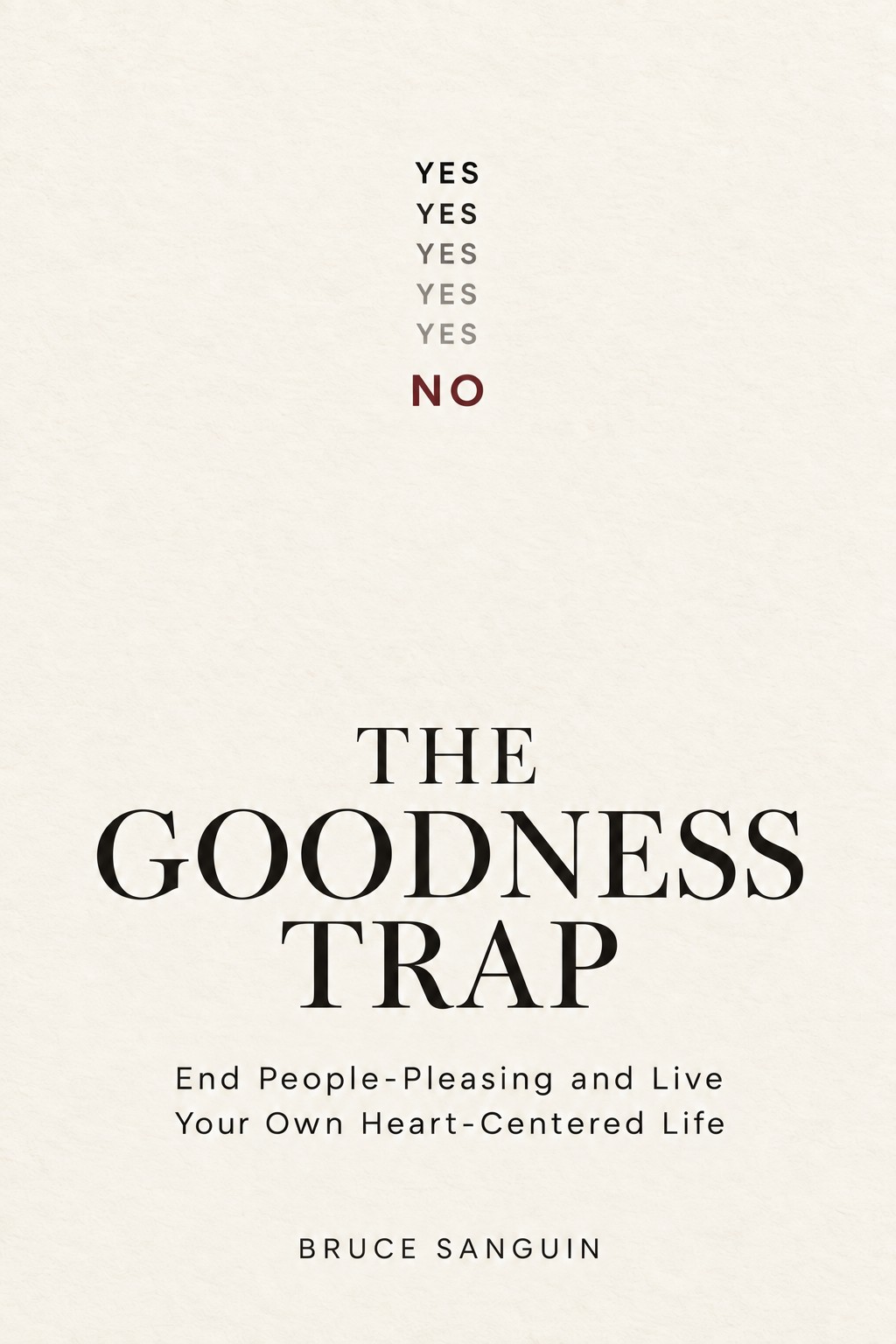
The Goodness Trap:
How to End People-Pleasing and Live Your Own Heart-Centred Life
This book describes how to end the people-pleasing identity and shift into your true, heart-centred self.
Subscribe
Subscribe to my newsletter.