
Relationship Therapy

“The Point of Intimate Relationships...
... is not to create a quick commonality by tearing down all boundaries; on the contrary, a good relationship is one in which each partner appoints the other to be the guardian of his solitude, and thus they show each other the greatest possible trust. A merging of two people is an impossibility, and where it seems to exist, it is a hemming-in, a mutual consent that robs one party or both parties of their fullest freedom and development.
But once the realization is accepted that even between the closest people infinite distances exist, a marvelous living side-by-side can grow up for them, if they succeed in loving the expanse between them, which gives them the possibility of always seeing each other as a whole and before an immense sky.”
- Rilke
I am a trained and accredited marriage and family therapist with the Canadian Association for Marriage and Family Therapy (RMFT 201707).
The Challenge of Intimate Relationships
Intimate relationships ask us to solve one of the deepest human tensions: how to move toward genuine closeness without losing ourselves in the process. We long to be fully seen, loved, and connected — yet many of us learned early in life that intimacy came at a cost. The cost was often self-abandonment: silencing our truth, suppressing our needs, walking on eggshells, over-functioning, or becoming who we thought we needed to be in order to preserve connection.
At the time, these adaptations made sense. They helped you maintain attachment, belonging, and emotional safety. But what once protected you can later become the very thing that undermines intimacy. Without realizing it, you may find yourself replaying old relational patterns in your adult relationships — seeking love while fearing honesty, craving closeness while losing your sovereignty, or confusing self-sacrifice with love.
Real intimacy does not require the abandonment of self. In fact, genuine intimacy becomes possible only when two people can remain connected while also remaining true to themselves. Therapy can help you recognize and interrupt the old agreements you unconsciously made about love, conflict, approval, and worth — so that relationships become a place of authenticity, freedom, and deeper connection rather than fear and adaptation.
From Falling In Love to Real Love
Most relationships begin with a period of intensity, attraction, and emotional fusion. We feel deeply seen, chosen, alive. It can seem as though we have finally found the person who will complete us, heal our loneliness, or rescue us from the ache of separation. In the early stages of love, we often project onto our partner not only who they are, but who we need them to be.
Eventually, reality enters the relationship. The differences, limitations, habits, wounds, and imperfections we couldn’t initially see begin to emerge. What once felt effortless may now feel frustrating, disappointing, or even threatening. This is not necessarily the end of love — it is often the end of fantasy.
At this crossroads, many couples either turn away from one another or begin the deeper work of real intimacy. Mature love asks something different of us: the willingness to let another person be fully themselves without trying to control, rescue, fix, or lose ourselves in them. Real love is not fusion. It is the capacity to remain connected while also remaining true to oneself. Paradoxically, it is only when two people stop abandoning themselves that genuine intimacy becomes possible.
If Only They Would Change!
Early Heartbreak Gets In the Way
Relationship Therapy FAQ
The minimum length of time is typically eight weeks. But it can take longer to identify old patterns and make new agreements. The first session is always a double session (100 minutes).
Out Now!
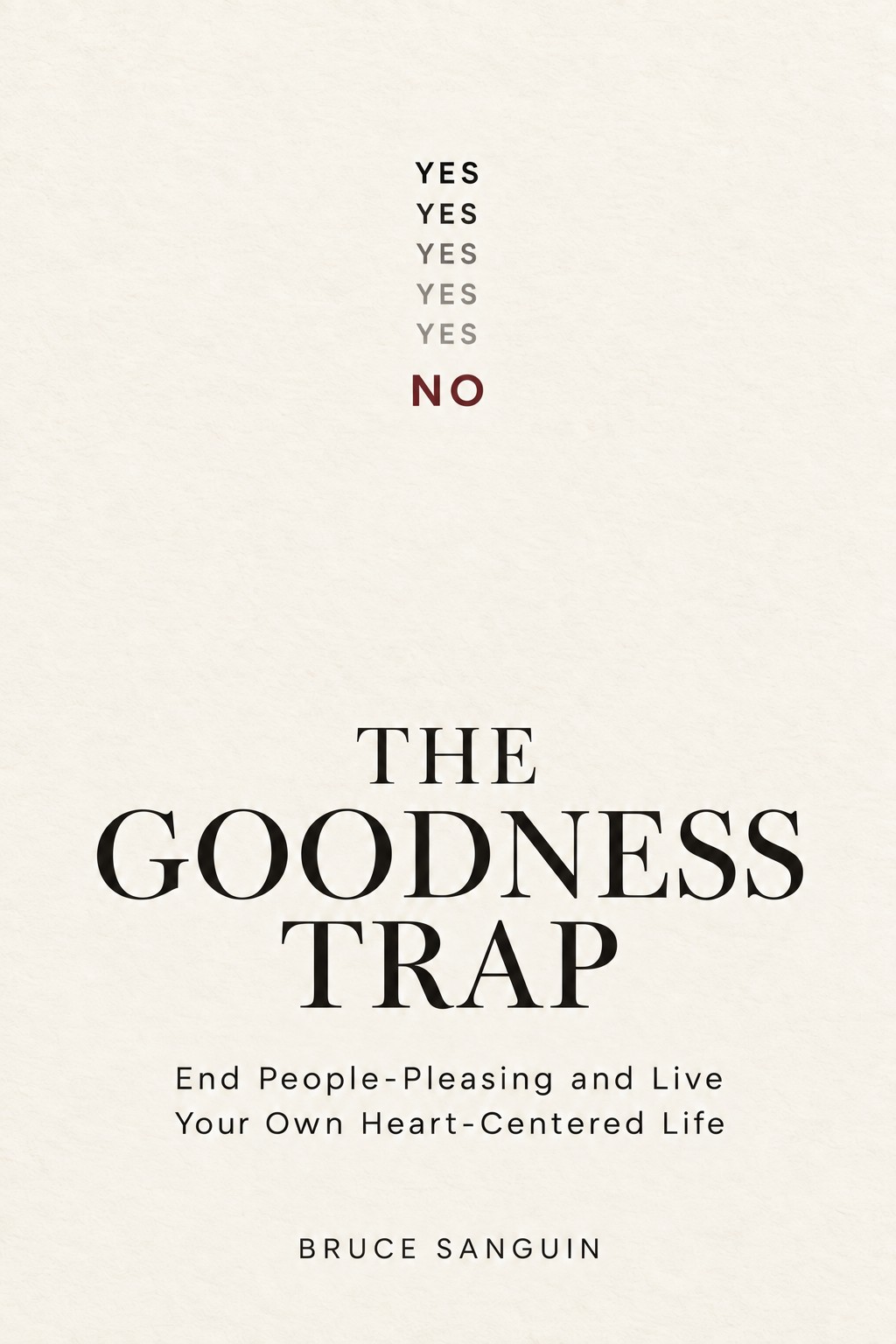
The Goodness Trap:
How to End People-Pleasing and Live Your Own Heart-Centred Life
This book describes how to end the people-pleasing identity and shift into your true, heart-centred self.
Subscribe
Subscribe to my newsletter.