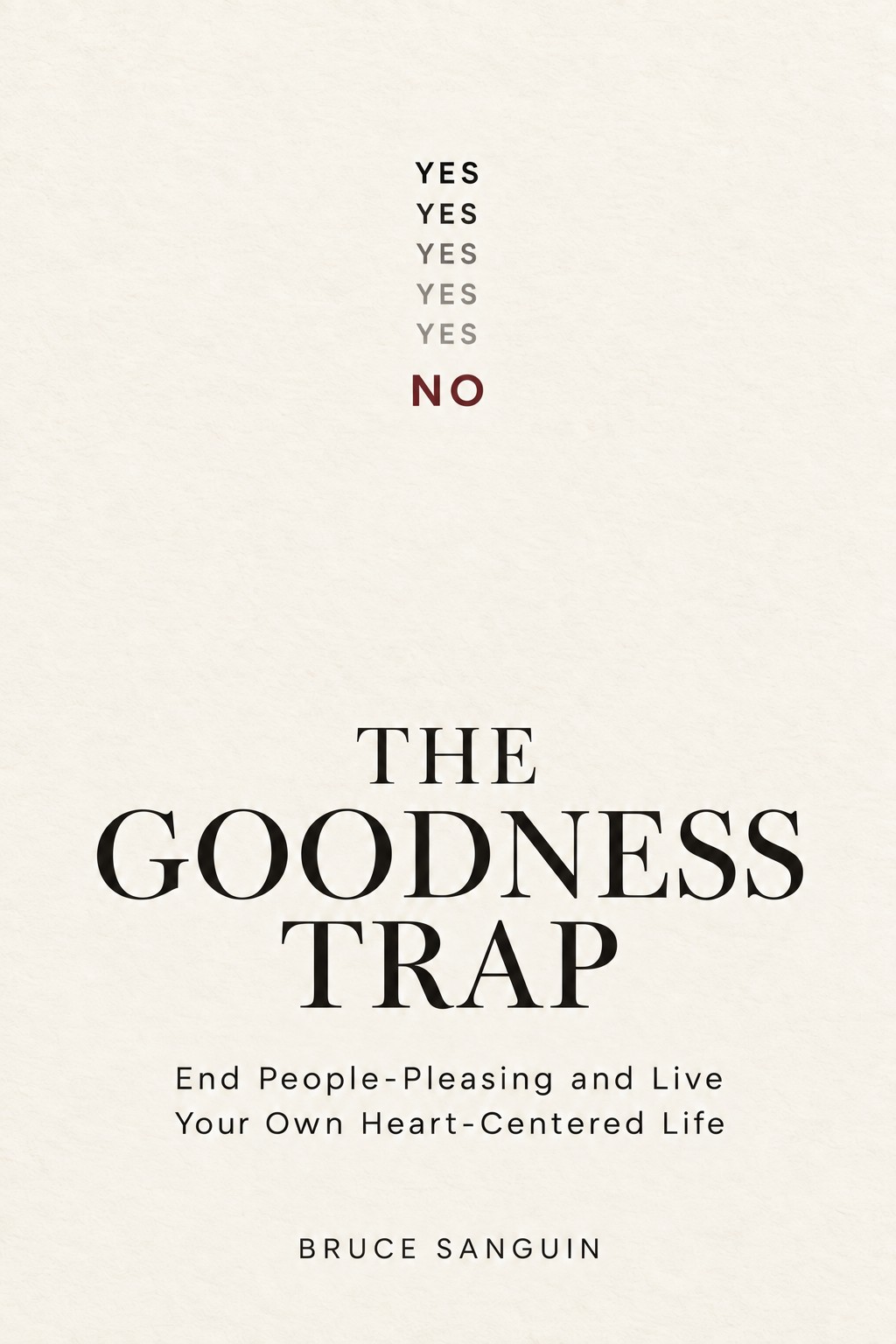
What would it mean to live a life of your own?
Not the life your parents imagined for you. Not the life your culture rewards. Not the life you constructed in order to be accepted, admired, safe or loved.
Your life.
It sounds obvious. Of course my life is my own. Who else could possibly be living it?
And yet the British writer and psychoanalyst Marion Milner spent years discovering that this question is far more complicated than it appears.
Milner was not interested in creating a grand philosophical system. She wasn’t trying to start a movement. She began with something much simpler and, in its own way, more radical.
She began paying attention to herself.
Her classic book, A Life of One’s Own, grew out of a personal experiment: What would happen if she stopped assuming she knew what made her happy and actually investigated her experience?
That question led her toward an insight that remains startlingly relevant almost a century later.
Many of us may be living perfectly respectable lives without yet living lives that are truly our own.
What Actually Brings You Alive?
Milner began keeping a diary.
But she wasn’t recording the major events of her life. She was interested in something subtler. She wanted to notice what actually delighted her.
Not what should delight her.
Not what intelligent people were supposed to appreciate.
Not what respectable people valued.
Not what she believed ought to make her happy.
What actually did?
This is a remarkably subversive question.
Think about the questions many of us unconsciously ask at the end of a day:
Did I get enough done?
Did I disappoint anyone?
Did I say the wrong thing?
Was I productive?
Does everybody still like me?
Milner turned her attention in another direction:
What gave me life today?
Over time, she became almost like a scientist studying her own existence.
And she discovered something surprising.
She wasn’t entirely sure what she liked.
She knew what she admired. She knew what educated and cultured people admired. She knew what she was supposed to enjoy.
But her own delight?
That required discovery.
People Pleasing Teaches Us to Look Outward
This is one reason Milner’s work matters so much for those of us who have spent our lives people pleasing.
People pleasing trains attention outward.
How are they feeling?
Are they upset?
Should I have said that?
Am I too much?
Am I enough?
What do they need from me?
The survivor can become exquisitely skilled at reading a room while remaining strangely uneducated in reading themselves.
We learn the moods of our parents, partners, bosses and friends. We detect subtle changes in facial expression. We anticipate disappointment. We adjust ourselves before anybody has even asked us to.
And gradually something happens.
We disappear from our own field of attention.
Milner reversed the direction of the gaze.
She began to notice her own responses to life.
Not narcissistically. Curiously.
What interested me?
What contracted me?
What opened something inside me?
What made me feel alive?
These are not trivial questions.
They are breadcrumbs leading us toward a life of our own.
The Wisdom Hidden in Ordinary Experience
One of Milner’s discoveries was that delight often appeared in remarkably ordinary moments.
Watching light move across a room.
Walking.
Drawing.
Listening.
Becoming completely absorbed in something for no particular reason.
There was no achievement involved. Nobody was applauding.
She was simply present.
This is important because many of us imagine that finding our own life requires some dramatic act.
Quit the job.
Leave the marriage.
Move to another country.
Start over.
Sometimes those things may happen. But they come later.
First comes attention.
Before you can choose your life, you have to notice it.
Milner discovered that life was continually revealing itself through her actual experience, but she had been too busy thinking about life to notice.
Learning to See Again
Milner became especially interested in drawing.
Not because she wanted to become a professional artist, but because drawing taught her something about perception.
When she tried hard to draw well, her drawings became stiff.
When she relaxed and simply looked — really looked — something changed.
She began to realize that we rarely encounter reality directly. We encounter our ideas about reality: our labels, expectations, assumptions and memories.
Modern neuroscience gives us another way of understanding this.
The brain is constantly predicting what it expects to encounter based partly on previous experience.
For someone shaped by trauma or chronic insecurity, this becomes especially important.
The survivor doesn’t simply encounter the present.
The survivor can encounter the past disguised as the present.
A facial expression becomes rejection.
A disagreement becomes abandonment.
Silence becomes danger.
Milner was exploring this territory decades before we had today’s language for it.
Her solution was beautifully simple.
Pay attention.
Look again.
The Problem With the Trying Self
Milner also became suspicious of a particular kind of effort.
The harder she tried to relax, the more tense she became.
The harder she tried to be spontaneous, the more self-conscious she became.
The harder she tried to become creative, the more creativity disappeared.
I call this dimension of ego the trying self.
It is constantly trying to become something.
Trying to be lovable.
Trying to be successful.
Trying to be enough.
Trying to be spiritual.
Trying to be good.
Trying to become the person we believe will finally earn us the right to relax.
There’s nothing wrong with healthy effort. We need discipline and commitment to accomplish things that matter.
But there’s another kind of striving that subtly separates us from ourselves.
We’re trying to become somebody instead of noticing the life already trying to emerge through us.
From the Trying Self to the Heart Self
In my own work, I use the term Heart Self.
The Heart Self isn’t another psychological “part.” It isn’t a technique or an improved version of the ego.
It’s the place where reality becomes personal — where life is expressing itself in, through and as you.
Milner used different language. She spoke about attention, observation, creativity and direct experience.
But I believe she was tracking a similar movement.
The survivor asks:
What should I feel?
The Heart Self asks:
What am I actually experiencing?
The first question consults the world.
The second consults reality.
And this is where Milner’s work becomes revolutionary.
She was restoring authority to her own experience.
She was learning to authorize herself.
Your Body Often Knows Before Your Mind Does
As Milner observed herself more closely, she noticed that her experience often registered before her conscious mind explained it.
A slight contraction.
A sense of unease.
Curiosity.
Interest.
Vitality.
Then the mind would arrive with its interpretations.
Today we sometimes call awareness of these internal bodily signals interoception.
But you don’t need the technical language to practice it.
You only need to become curious.
What happens in my body around this person?
What happens when I imagine saying yes?
What happens when I imagine saying no?
Where do I feel more alive?
Where do I disappear?
This doesn’t mean every bodily sensation contains infallible wisdom. Our perceptions can be distorted by the past.
But if we never learn to pay attention to our own direct experience, we end up outsourcing authority entirely.
To experts.
Parents.
Partners.
Religious authorities.
Social media.
Public opinion.
Algorithms.
Everybody seems to know who we should be except us.
Three Questions for Discovering a Life of Your Own
So here’s a simple experiment inspired by Marion Milner.
For one week, take five minutes at the end of each day.
No phone. No television. No devices.
Just sit with a notebook and ask yourself three questions:
1. When today did I feel most alive?
Don’t judge the answer.
It might have been during an important meeting.
Or it might have been drinking coffee alone in the kitchen.
Notice.
2. When today did I disappear from myself?
When did you stop including yourself in the occasion?
When did your attention become entirely occupied with managing somebody else’s response, gaining approval or avoiding conflict?
Again, don’t judge it.
Notice.
3. What was my body trying to tell me before my mind explained it away?
Maybe there was excitement.
A contraction.
Warmth.
Reluctance.
Curiosity.
Sadness.
Don’t immediately turn the sensation into a command.
Simply become interested in it.
This was part of Milner’s genius.
She trusted attention itself to become transformative.
The Quiet Heroism of Marion Milner
There is something almost amusingly modest about Milner’s heroism.
Thoreau walked to Walden Pond.
Nietzsche challenged the moral foundations of Europe.
Socrates drank the hemlock.
Marion Milner sat down with a notebook.
But perhaps that takes its own kind of courage.
Especially if your life has been organized around what everybody else needs, wants, expects or thinks you should be.
Because eventually your attention may reveal something inconvenient.
You may discover that what you thought you wanted isn’t what you want.
That something you dismissed gives you enormous joy.
That a relationship requires you to disappear.
That your body has been whispering “no” while your mouth keeps saying “yes.”
That the person you’ve been trying so hard to become isn’t actually you.
This is why learning how to live a life of your own begins not with dramatic change, but with attention.
Notice your life.
Trust your delight.
Become curious about your experience.
Listen to your body without making it infallible.
Pay attention to the moments when you come alive.
Those moments matter.
They are breadcrumbs.
They may be the soul’s way of leading you home.
You only get one life.
Let it be yours.